1.Perspective 1
Government transformation programmes often invest in systems of record without equally investing in systems of decision. As a result, leadership still waits for delayed reports while frontline and programme teams operate with incomplete shared visibility.
2.Decision intelligence in the public sector is not a dashboard fashion
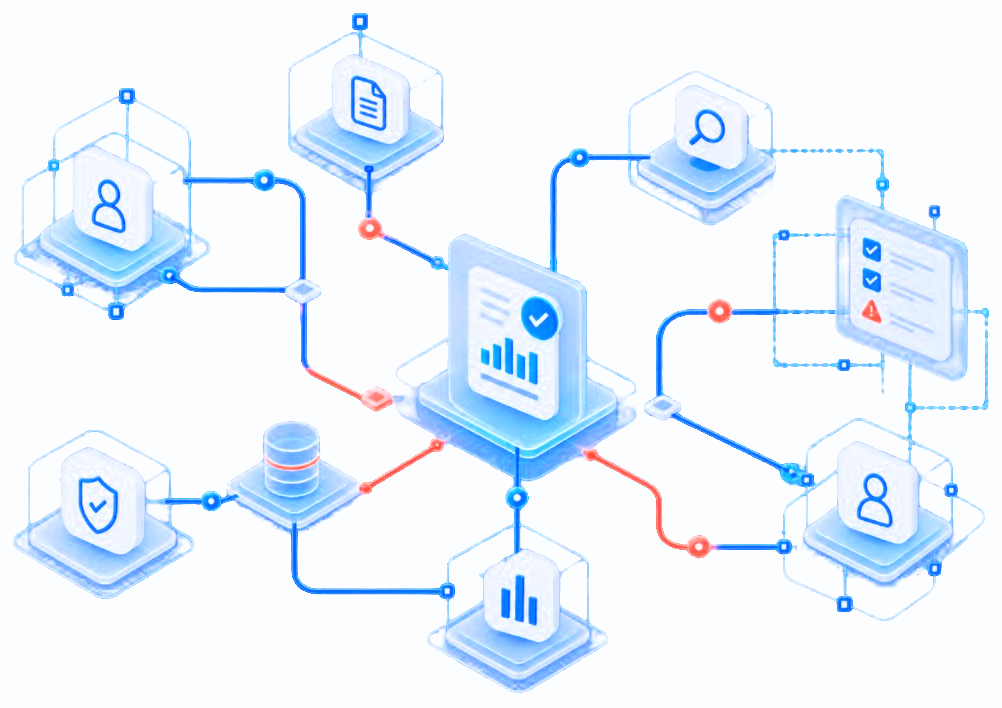
Decision intelligence in the public sector is not a dashboard fashion. It is the disciplined connection of approved indicators, ownership, exception handling and evidence for review meetings and policy briefings.
3.Perspective 3
This note outlines design principles for public decision-intelligence platforms: indicator stewardship, data quality transparency, privacy-by-design for sensitive populations, and clear separation between analytical signals and administrative determinations.
4.Perspective 4
Generative AI can assist briefing and knowledge retrieval, but only when grounded in authorised sources and reviewed by accountable officials. Uncontrolled generation has no place in entitlement or compliance decisions.
5.Perspective 5
Institutions that succeed treat decision intelligence as both a technology capability and a governance capability — with programme owners, data stewards and leadership operating from a common evidence model.
6.Perspective 6
Indicator stewardship means every published measure has an owner, a definition, a refresh cadence and known quality limits. Without stewardship, dashboards become contested theatre rather than decision support.
7.Privacy-by-design is non-negotiable where programmes touch vulnerable populations
Privacy-by-design is non-negotiable where programmes touch vulnerable populations. Aggregation rules, access roles and purpose limitation must be designed before analytics convenience expands data exposure.
8.Leadership routines should consume the platform on a fixed cadence
Leadership routines should consume the platform on a fixed cadence. If the decision system is bypassed whenever politics intensifies, the institution will revert to spreadsheet truth and lose the investment.
01
Pick case

About Agrayian AI Labs
Agrayian AI Labs converts complex government, banking and enterprise workflows into secure, intelligent and measurable AI systems.
Learn more about us