1.The production gap between demos and operating systems
Many organisations first encounter agentic AI as a compelling demonstration: a system that plans steps, calls tools and completes a multi-stage task with limited supervision. The leap from demonstration to production is rarely a model problem. It is an operating-model problem.
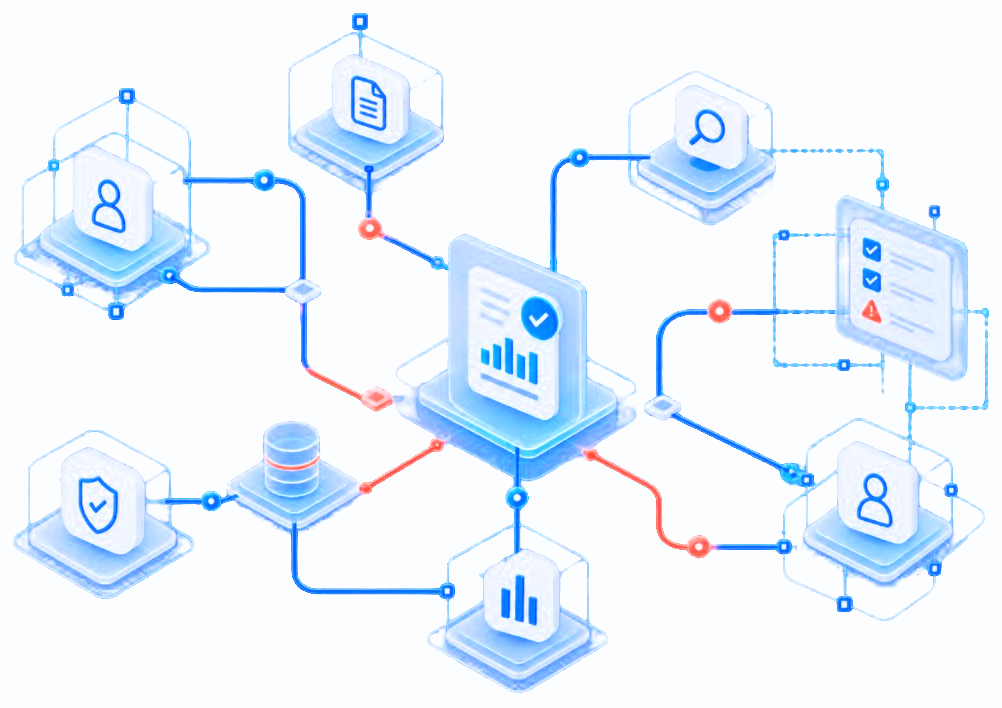
In enterprise and government settings, an agent is not simply an autonomous assistant. It is a constrained actor inside a control environment. That means the organisation must define allowable goals, authorised tools, data boundaries, escalation rules and evidence expectations before autonomy is expanded.
2.Design for clear goals and constrained tools
Effective agentic systems separate intent, planning, tool execution and verification. Humans remain accountable for consequential outcomes, while the agent accelerates preparation, retrieval, drafting and routine orchestration within pre-approved limits.
Clear goals
Allowable intents and success criteria before autonomy expands.
Constrained tools
Catalogued actions with permissions and irreversible-action gates.
Verification
Checks that separate draft output from consequential action.
Escalation
Human paths when confidence, policy or risk thresholds trip.
Evidence
Logs and artefacts leaders can review after the fact.
3.Separate intent, plan, tool use and verification
The organisations that scale agentic AI well treat evaluation as continuous. They monitor task success, tool misuse, cost, latency and exception rates. They also version prompts, policies and tool permissions with the same discipline applied to application releases.
01
Intent
Allowed goals only
4.Start narrow, instrument everything, then scale
Agrayian AI Labs advises clients to start with narrow, high-clarity workflows where success criteria are explicit and reversal is possible. From there, autonomy can be increased only as governance, monitoring and operating ownership mature.
01
Pick case
High clarity
5.Treat every tool call as a privileged action
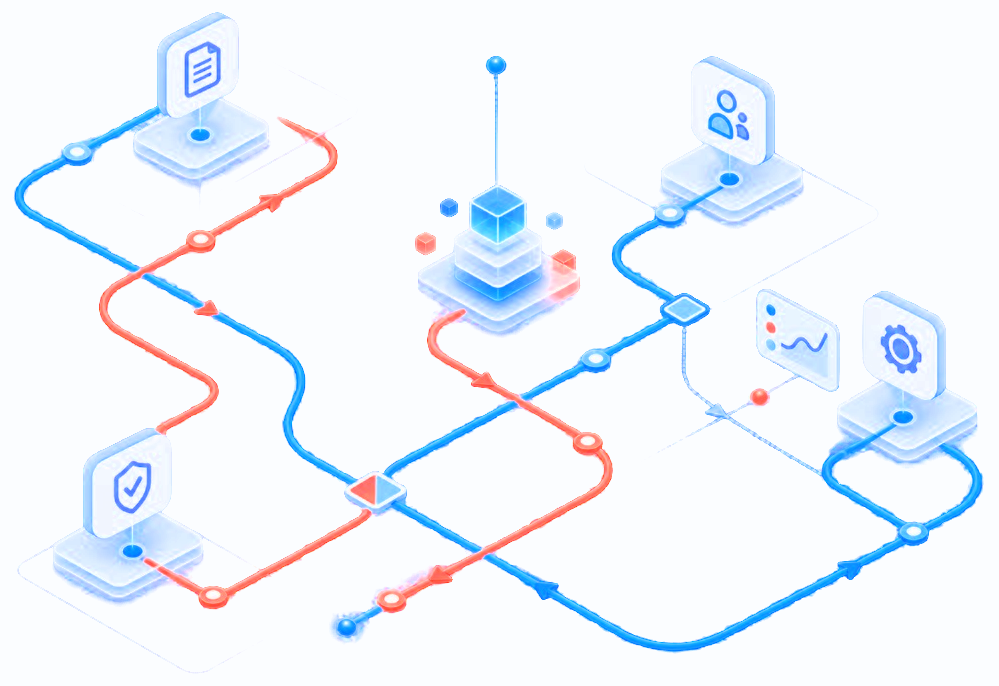
A practical control pattern is to treat every tool call as a privileged action. That means cataloguing tools, defining who may authorise new tools, logging arguments and outcomes, and requiring human confirmation for irreversible or externally visible actions until residual risk is accepted.
Tool-call governance flow
Agent
Policy check
Tool
6.Assign operating ownership before expanding autonomy
Operating ownership must be explicit. Someone is accountable for the agent’s allowed goals, someone for the evaluation harness, and someone for incident response when the agent behaves unexpectedly. Without those owners, demos never become dependable services.
Business owner
Outcome accountability for the decision the agent supports.
7.Publish an autonomy ladder
Finally, agent programmes should publish an autonomy ladder: which tasks stay human-led, which are human-approved, and which may run unattended within bounds. Publishing that ladder to delivery and risk teams prevents quiet expansion of privileges under delivery pressure.
Human led
- · Agent prepares
- · Human decides
- · Full audit trail
Human approved
- · Agent proposes action
- · Human confirms
- · Bounded retries
Bounded autonomy
- · Pre-approved tools
- · Hard stop rules
- · Live exception queue
Governance isn't a brake on autonomy. It's the system that makes safe autonomy possible.

About Agrayian AI Labs
Agrayian AI Labs converts complex government, banking and enterprise workflows into secure, intelligent and measurable AI systems.
Learn more about us